
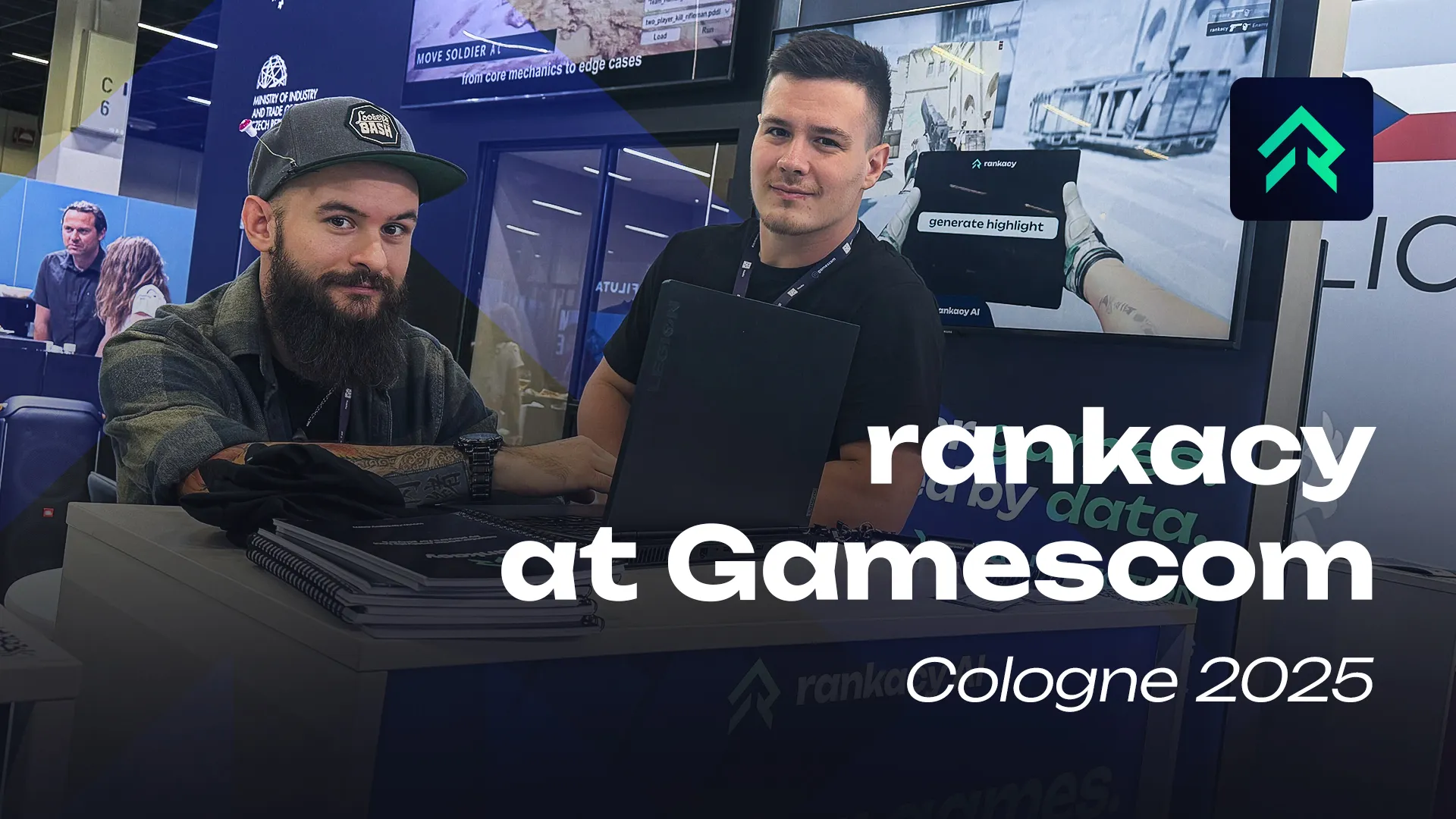
Gamescom is not only booths and cosplay. It is where the direction of the industry gets set, from the largest publishers to the studios trying to change the game. In August 2025 a four-person Rankacy crew went to Cologne to meet potential partners, see what others are building and measure our work against the field.
Standing among hundreds of thousands of players
In a hall of lights, screens and long queues for unreleased titles, the scale of the industry is hard to miss. On one side, crowds of players waiting to get their hands on the next big thing. On the other, the quieter business area, where decisions about collaborations, investment and technology are made behind closed doors. Decisions that will shape how people play a few years from now.
For a small team from Czechia the contrast is stark, and it is also a motivation. Standing next to the giants with something original to offer is exactly the position we want to be in.

Three trends you could not miss
- AI
- No longer a side project. It is becoming part of development itself, from generating game worlds to player-facing analytics that change the experience.
- Retention
- Free-to-play is the standard now. Keeping players engaged over months, not sessions, is still an open problem.
- Monetization
- Still evolving, from battle passes to new ways of bringing players into an in-game economy.
Where our work sits
The intersection of those three trends is exactly where behavioral AI makes sense. Analytics that understand what a player did and why keep people engaged, because players see themselves improve. A model that reads intent, pressure and timing is player-facing intelligence, not another dashboard. And a game players return to is the foundation any economy is built on.
The industry is asking how to understand players better. That is the question we have been working on from the start.
We came back with new contacts, a clearer picture of the market and confirmation that the problem we chose is the one the industry is now naming out loud.